Inspired by Pseudo Press, the creator of my favourite zine I own, Making Books: a personal manifesto, and her amazing monthly newsletter, I decided to finally undertake something I'd been pondering for a while. I want to create a real bound book with a hand stitched spine.
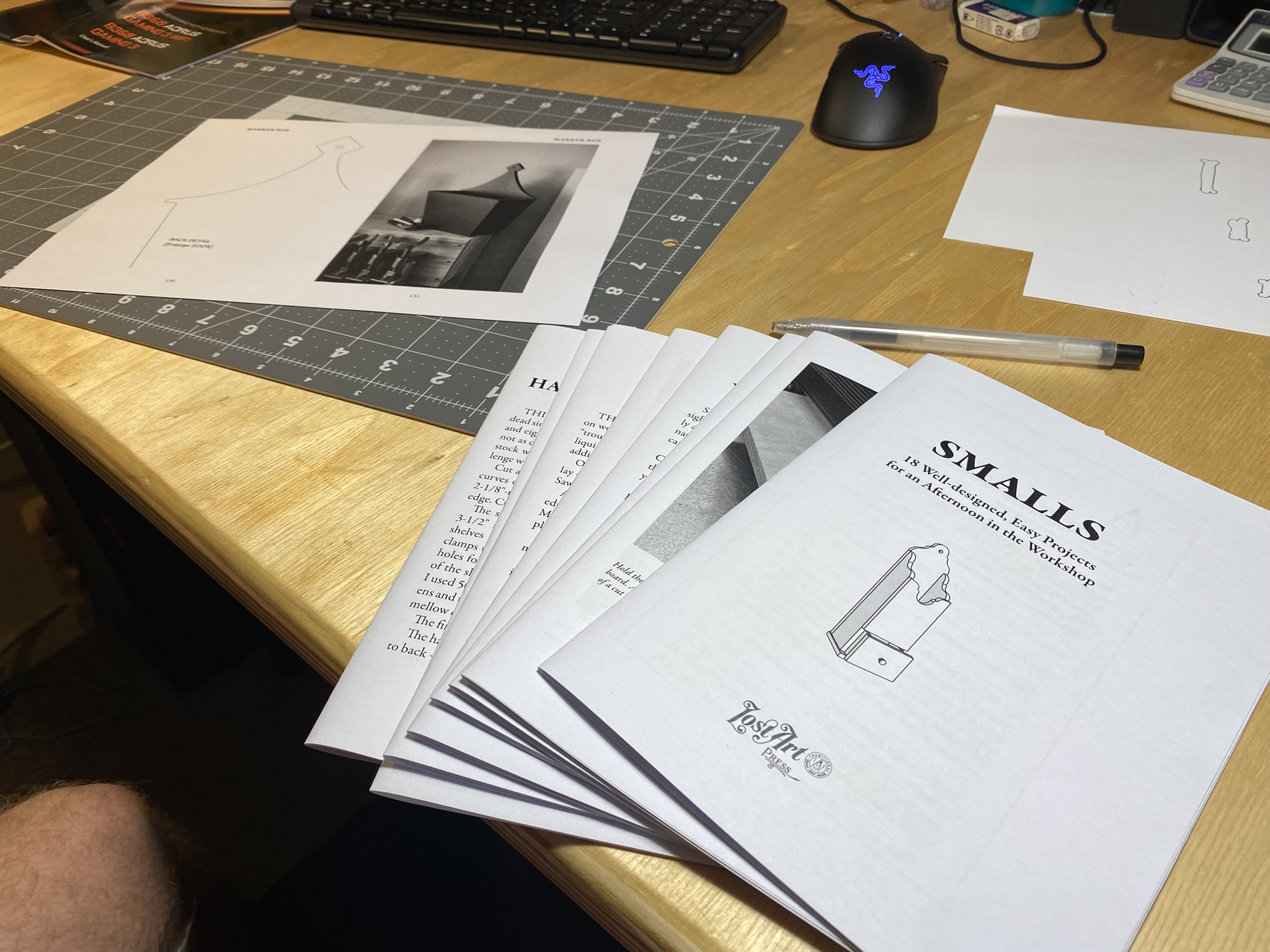
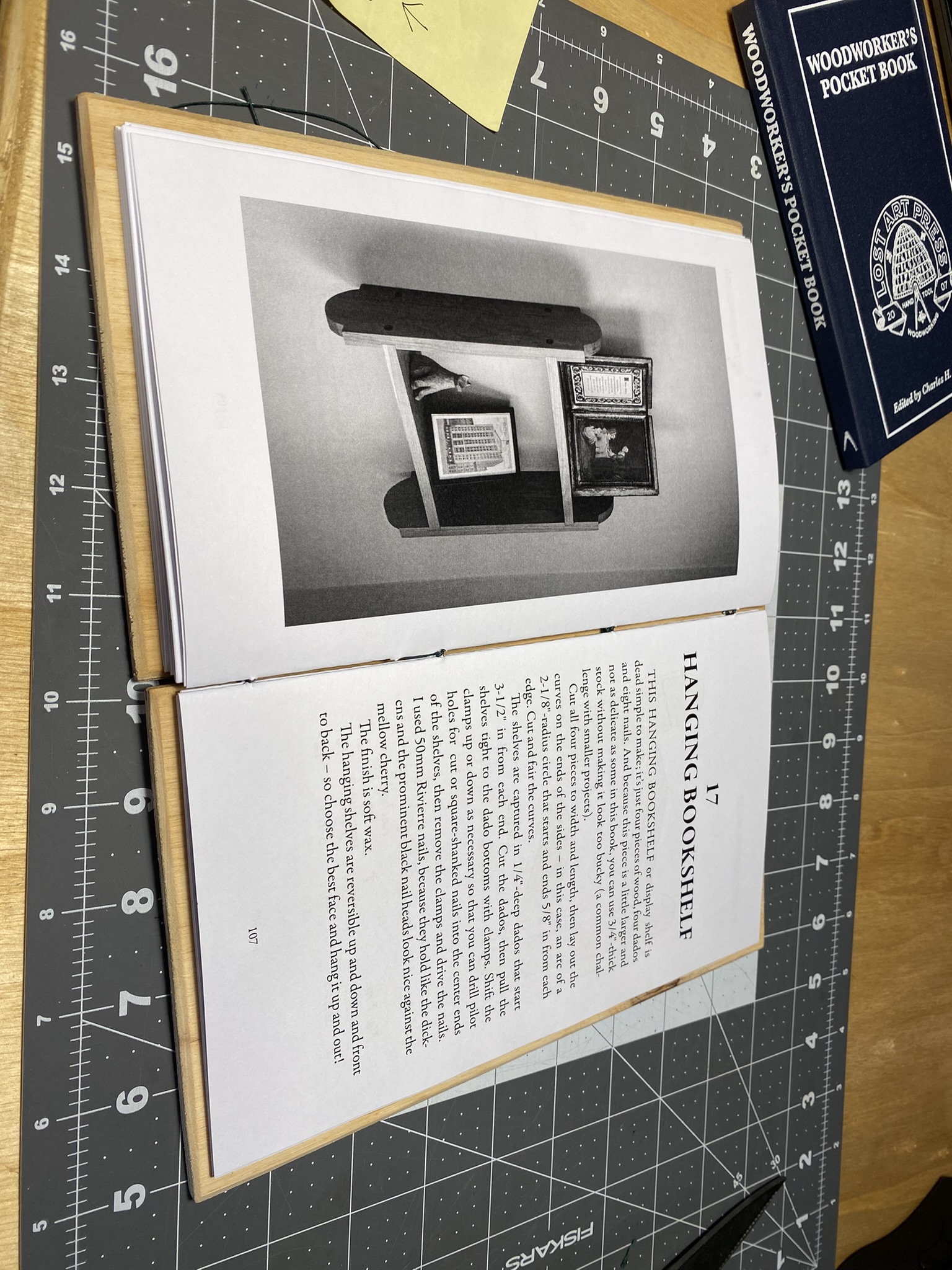
Lost Art Press just published a digital edition of Smalls, a collation of projects to use up your left over lumber from furniture making. I've printed and bound so much of their work, so this book seemed like a great candidate to be made both more practical as a reference and more sentimental.
As I investigated different binding methods, Coptic binding quickly stood out to me as the obvious choice. Its an ancient method that leaves an exposed spine stitching to create a simple but very effective bind. Even better they were traditionally made with wood covers (yippie, I love wood!). I knew that if I was going to give all this labour to hand sitch a book, I'd enjoy if my hard work stayed visible.
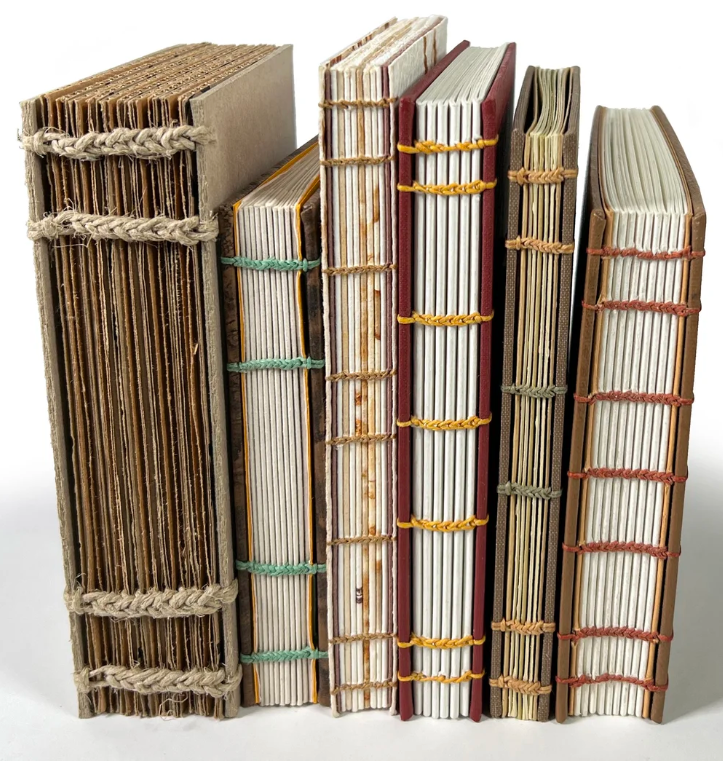
Guides online outlined a very straight forward process using tools I had on hand already so I got to work.
First step was printing the booklets (signatures), which was too fiddly to get Foxit to both scale correctly and create the booklet, so I settled on making a 'pocket' book that'd be a little big. Next time I'm going to use a free tool Layout Department recommended by Pseudo Press. After a small amount of playing with the free version, I've already paid for the premium. Its an exceptional tool for my needs and is one of those beautifully hyper focused programs that only wants the job done.
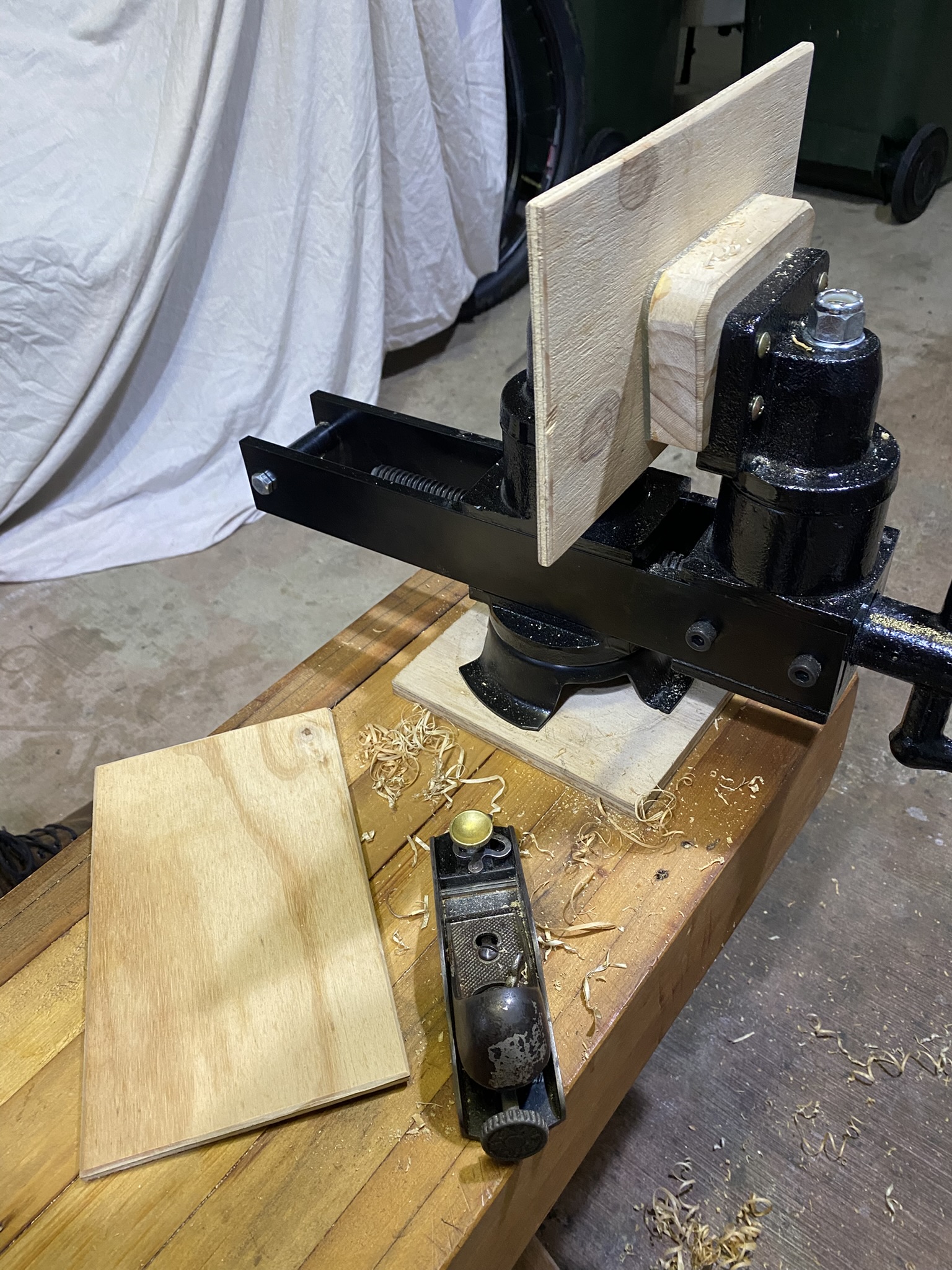
I wish I had more details or anecdotes to share about the process, but I ran into very few snags while I closely followed this extremely informative and deatiled tutorial. I did get to find my own path through creating my plywood covers, planning and sanding until they felt lovely in my hands. This ended up being a perfect little two night project.
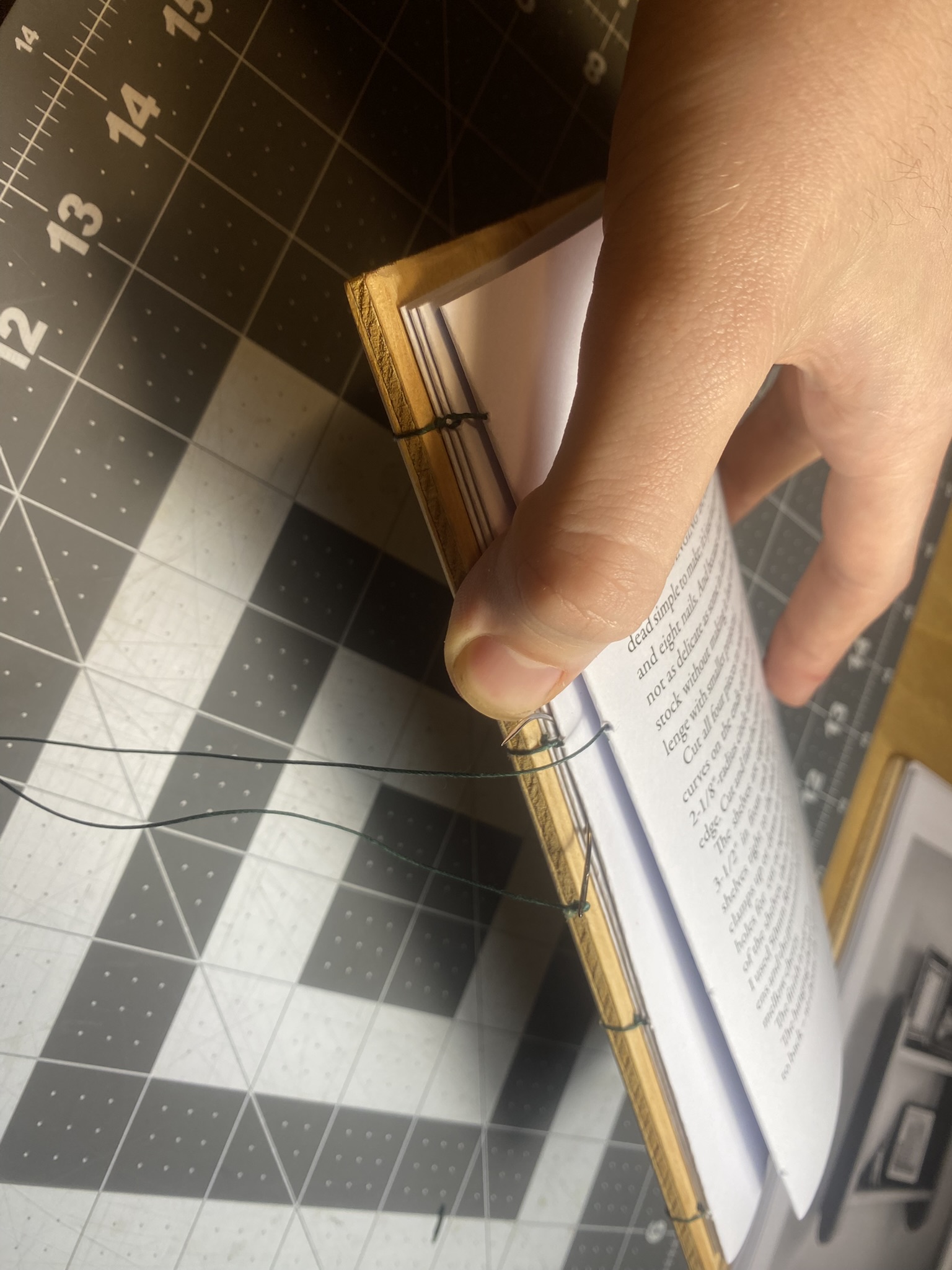
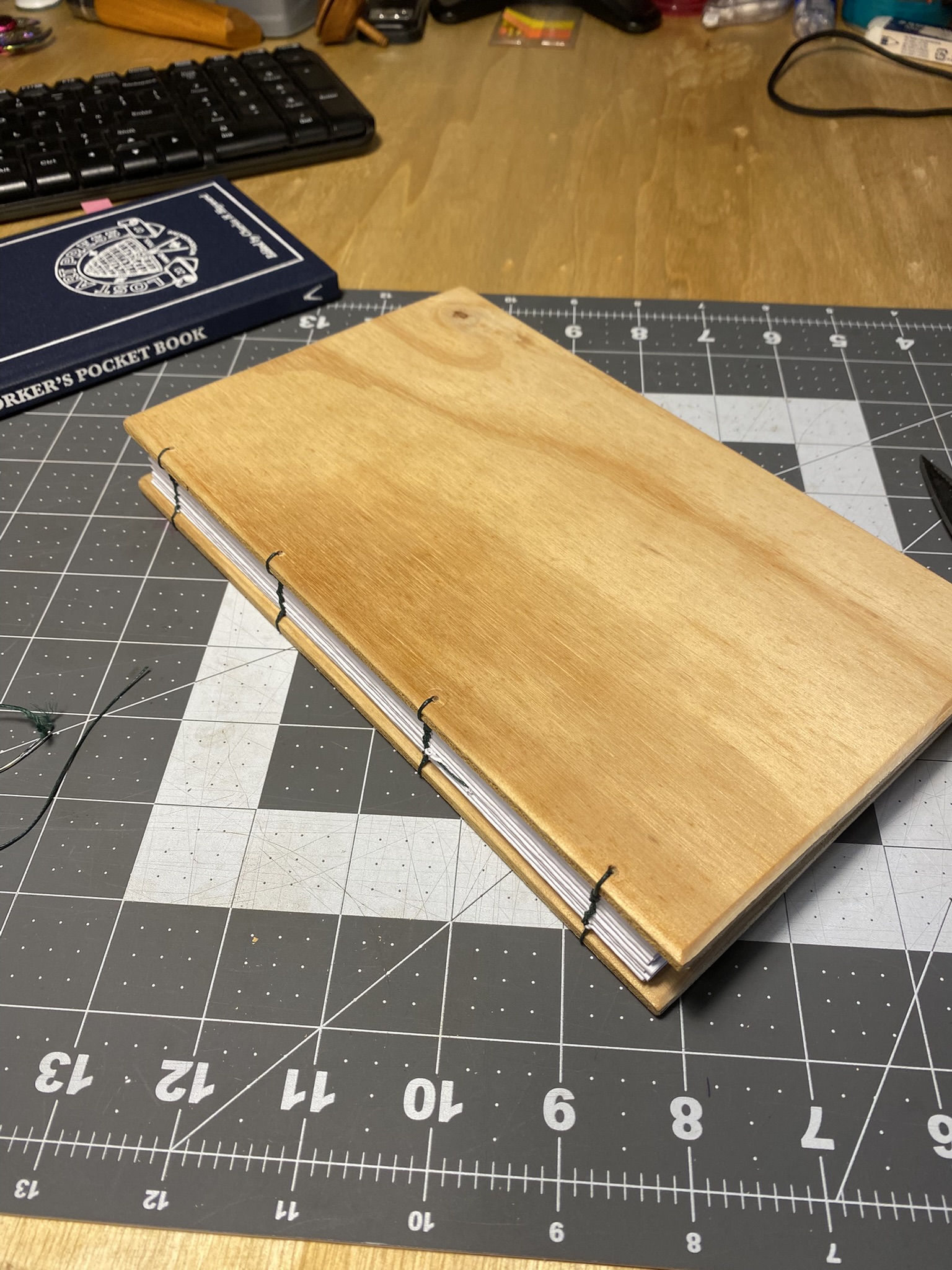
I did tear the signature twice and I'm not entirely happy with how loose the front cover ended up but overall I'm incredibly satisfied as a first crack. It feels great in my hands and even lies completely flat! I especially love a scrap woodworking book protected by scrap wood. I am contemplating painting the title on the cover, but I want to ensure it comes out very sharp so I'm going to chew on the solution and leave it as a future mini project.
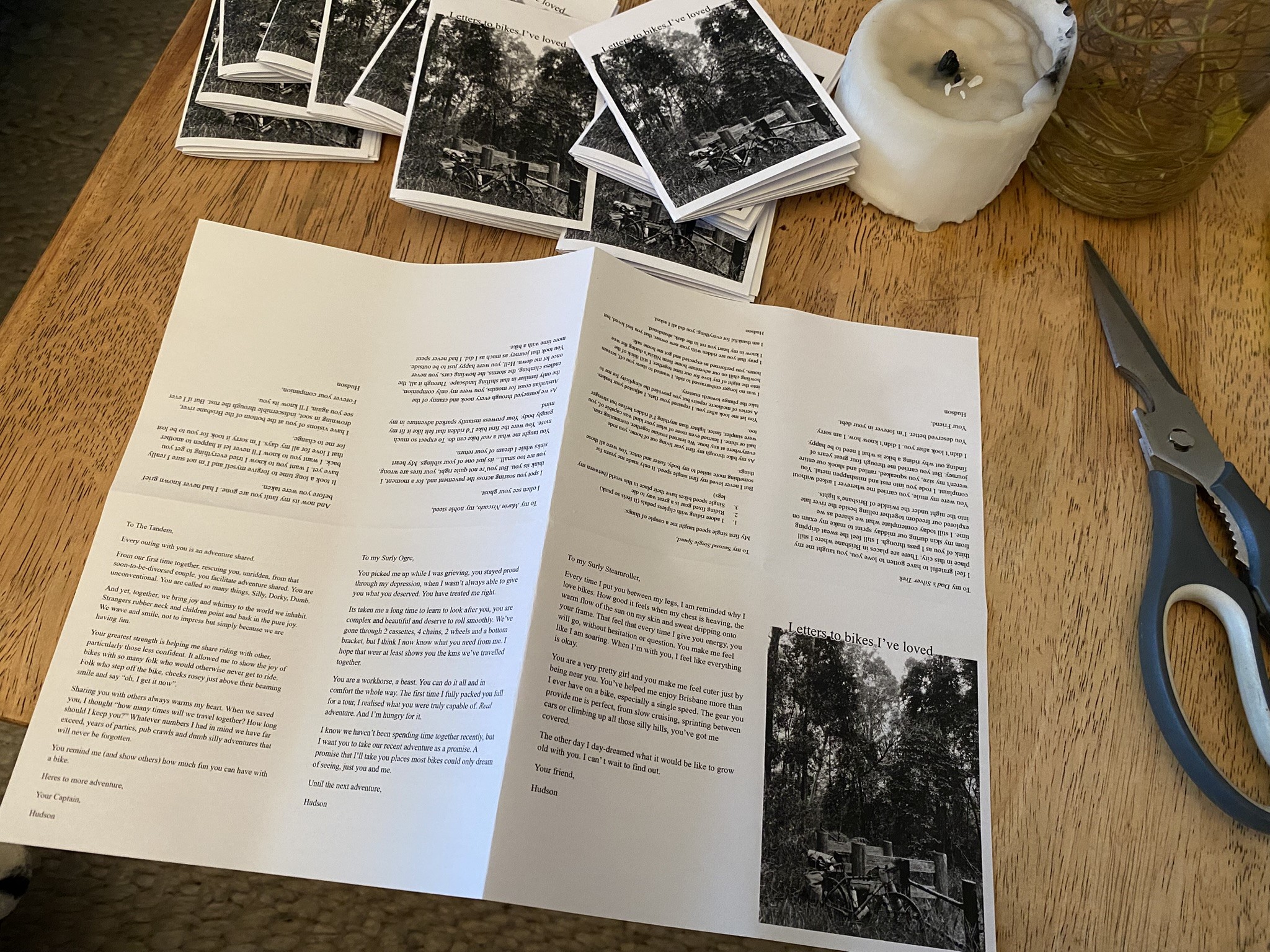
My binding tendencies were developed around zine culture, where the core mission is placing ideas into folk's hands as quickly and frugally as achievable. I've been described as pragmatic on more than one occasion and find something so beautiful about several pieces of paper stolen from someone's work printer bound by a couple of stables being all it takes to publish your ideas. I recently made a zine, Letters to Bikes I've Loved, and I designed this one with minimal formatting overhead, B&W and single page, just so I could print then for next to nothing and get what I wanted into the world.
Lingering in the opposite corner is the noble quest to create archival quality books. This desire is born of an obligation to protect knowledge for beyond our lifetimes. Much has both been lost and protected by quality binding. This durability however, comes at a price, keeping knowledge gated behind low print runs and high costs. The publishers I adore who produce texts in archival quality often enjoy the best of both worlds by offering digital publication alongside their generational physical copies.
The book I've just created is neither of these, it is a personal project to create a slightly more practical reference text that'll make me proud when I see it on my shelf. It'll last longer than a zine (I hope) but it is certainly not archival. I am nonetheless proud of my work and am excited to take on the next binding challenge when it presents itself.